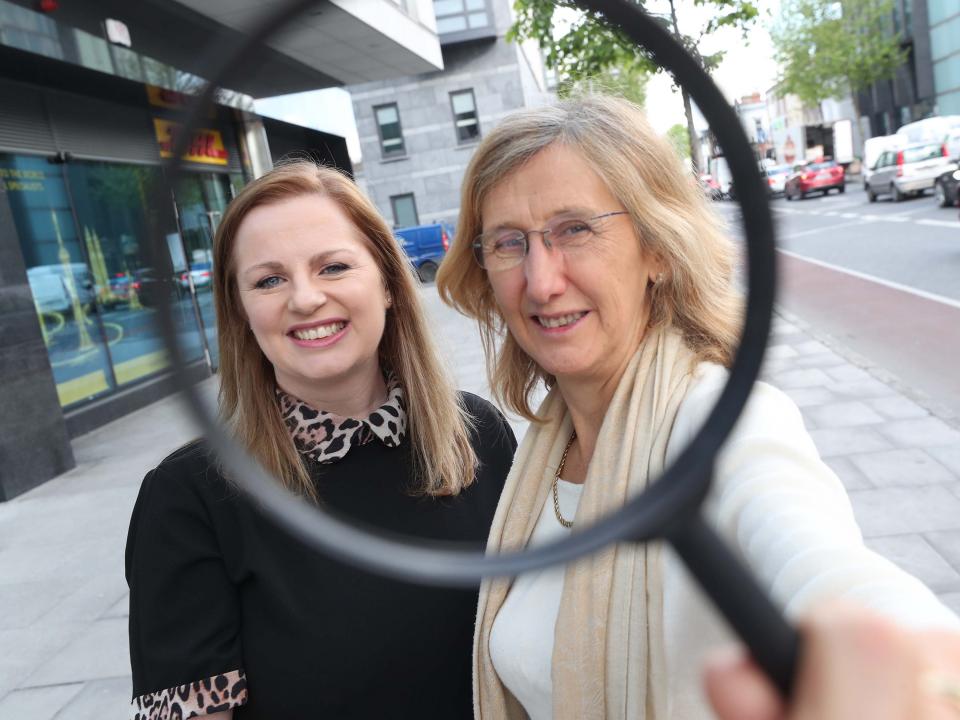
In 2008 MS Ireland began working with the Physiotherapy Department of The University of Limerick on the Getting The Balance Right programme. With the success of this programme we have now established a formal partnership with the University.
Using money raised through the Tesco Ireland Charity of the Year programme and a grant from the Dormant Accounts funding, this physiotherapy and exercise programme for people with MS was established. One arm of the programme gave people with MS access to physiotherapy sessions and other forms of exercise classes. Another arm aimed to research the best physiotherapy and exercise interventions for people with MS.
As part of our World MS Day celebrations in 2011, MS Ireland and The University of Limerick signed a Memorandum of Understanding. The formal partnership outlined ways in which the various academic institutions could focus their research on MS.
Learn more about the Memorandum of Understanding
Research participates wanted to test online mindfulness based programme MS Ireland provides information on trials and studies some people with MS might find useful, research student Hannah Morris, NUI Galway needs your assistance with her project on an online mindfulness course. Title of project: The effectiveness of an online Mindfulness Based Cognitive Therapy intervention programme at improving well-being in people with Multiple Sclerosis Purpose of study: This study is concerned with improving the well-being in people with Multiple Sclerosis (MS). The Mindfulness in Action program aims to teach you a number of mindfulness skills and exercises that we believe may help you to cope better with your illness and improve your well-being The programme is 12 sessions which should be taken over a 4 week period, lasting 30/40 minutes per session. Participants need to take part in a number of questionnaires about the programme, throughout these four weeks. Who to contact? The study is being conducted at School of Psychology, National University of Ireland, Galway. You can contact the researcher, Hannah Morris at h.morris3@nuigalway.ie or read the information sheet for further information
TECFIDERA (BG-12) is approved in the US The Food and Drugs Administration in the US has approved the licensing of Biogen Idec’s new oral therapy, Tefidera. Previously known as BG-12 the new therapy will be prescribed as a first line therapy for those with relapsing–remitting MS in the US. It is expected that the European Medicines Agency (EMA) will follow suit in due course, making the treatment available in Ireland. Tefidera is taken orally twice a day. Common side effects include flushing, gastrointestinal upset, diarrhoea, nausea, abdominal pain, tiredness and headache. It is not fully understood how the drug works but it seems to help to reduce inflammation and protect the nerves. Two significant trails have been completed to show the efficacy of the drug: In the DEFINE trial the drug was compared with a placebo (dummy pill) and delivered in two daily doses and three daily does to 1,200 people with MS. Relapse rate reduced by 48% for the twice daily dose and 53% for the three times a day dose. Disability progression also reduced, 38% reduction for the twice daily doses and 34% for the three times a day dose. In the CONFIRM trial the drug was compared with a placebo and glatiramer acetate among 1232 people with MS. BG-12 reduced the number of relapses in one year by 44% for the twice-daily dose and by 51% for the three times daily dose, compared to placebo. In contrast, glatiramer acetate reduced the number of relapses by 29% compared to placebo. No reduction in disability progression was noted. The review by the EMA may take a few months. If approved the drug may become the first oral first line therapy for people with relapsing-remitting MS. Read our BG-12 Information Sheet Read further information on Biogen Idecs webpage
Recruiting Now New medicines: How should we weigh the risks and benefits? And who should do so? As part of a European research study, Genetic Alliance UK and the Welsh Institute for Health and Social Care (at the University of Glamorgan, UK) want to understand how individuals affected by rare and serious illnesses perceive the risks and benefits of new medicines. The work is key to ensuring that the patient perspective on the analysis of risks and benefits is valued as part of regulatory decision making processes. How can I get involved? As part of this work we are looking to recruit a group of patients, and the parents of affected children, to take part in a workshop in May 2013, in Dublin. The aim of the workshop is to gather the views of those affected by rare and serious illnesses within Ireland on the regulation of new medicines for their condition. Other such events have been both stimulating and fun to take part in, as well as being a vital part of the research. Where can I find more information? For more information about the project or the workshop please contact Karen Munnelly Irish Platform for Patients' Organisations, Science and Industry (IPPOSI) on kmunnelly@ipposi.ie / (01) 407 1629 to register your interest. MS Ireland are a member of Irish Platform for Patients' Organisations, Science and Industry (IPPOSI)
Cognitive impairment differs between primary progressive and relapsing-remitting MS This study from France looked at the cognitive abilities of patients with primary progressive MS (PPMS) and relapsing-remitting MS (RRMS) compared with healthy controls and compared the cognitive patterns of these types of MS. In this cross sectional study, 41 PPMS patients, 60 RRMS patients and 415 healthy controls (HC) were recruited. The controls were divided into 20 groups based on age, sex and education level. A large battery of neuropsychological (NP) tests were performed on the participants including the modified version of the Brief Repeatable Battery, the Stroop test, computerised tests from the Test of Attentional Performance battery, the numerical span test and the Rey Complex Figure. They found that patients with PPMS performed worse than matched HC. Patients with PPMS presented with a wide range of cognitive deficits in information processing speed, attention, working memory, executive function and verbal episodic memory. Patients with RRMS performed worse than matched controls on a computerised digit-symbol substitution task and alertness test, reaction time for visual scanning, and Paced-Auditory Serial Addition Test-3 seconds. Therefore the impairment in patients with RRMS was limited to information processing speed and working memory. Overall this shows that patients with PPMS had worse NP scores and were more impaired in cognitive domains than patients with RRMS. Source: Neurology. 2013 Mar 20. [Epub ahead of print] Read the abstract on PubMed How Does cognitive impairment effect you? Provide your comments below.
Professor Michael Hutchinson Becomes MS Ireland’s Medical Advisor MS Ireland is delighted to formally announce that professor Michael Hutchinson has been appointed as the Society’s Medical Advisor. Professor Hutchinson is a Consultant Neurologist at St Vincent’s University Hospital and Newman Clinical Research Professor at University College Dublin. Professor Hutchinson will work with MS Ireland around research funding and advocacy, research translation and will help to improve medical information offered by MS Ireland. Professor Hutchinson says of his appointment, “I’m delighted to become MS Ireland’s Medical Advisor. I have long been a supporter of MS Ireland’s work and I am pleased to help in any way I can. I have had a long career as a Consultant Neurologist and my clinical interest has always been MS. Over the years I have seen great changes in the care and treatments available for people with MS. I hope with my new role I can report on many more new advancements and developments. “ Professor Hutchinson is on the editorial board, and organises the controversies series, of the “Multiple Sclerosis Journal.” He instigated and organised with Christian Confavreux, Lyon, the pivotal Pregnancy in Multiple Sclerosis (PRIMS) study in Europe. He was chairperson of the organising committee of ECTRIMS held in Dublin in 2001. He was on the medical advisory boards of the AFFIRM study of natalizumab and the BG-12 study (CONFIRM) in relapsing multiple sclerosis. He was a member of the international panels convened by the National Multiple Sclerosis Society (USA) on the differential diagnosis of MS (2006) and the McDonald Criteria for the diagnosis of MS (2010). He is a referee for a number of neurology journals and has over 200 research peer-reviewed publications on a variety of subjects including multiple sclerosis, dystonia and hereditary spastic paraplegia. Image: Prof. Michael Hutchinson
What's happening in your area during the 10th - 16th June to mark National Carers Week...
Find out moreMay
26
13:00 - 17:00
May
27
May
27
May
27
May
27
May
27
May
27
10:00 - 16:00
May
28
May
28
May
28
26 May 2013: /uploads/Image/Get%20Involved/Treks%20and%20Challenges/Poster%20Ride%20O...
View all events
Change text size: