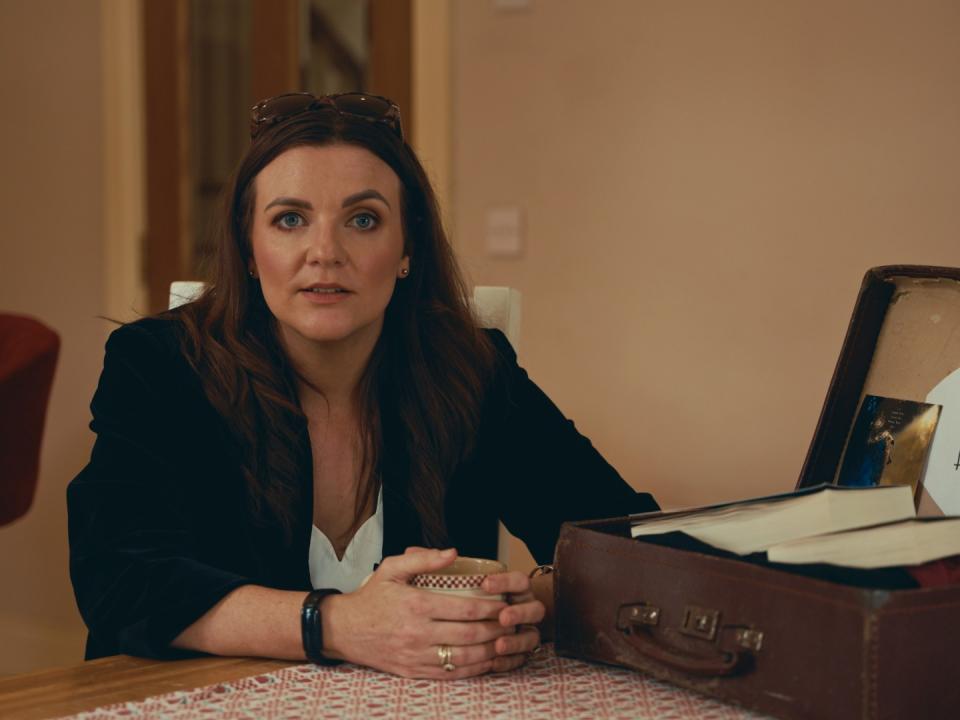
Sarah Mather, a mum of two who was diagnosed with MS in 2022, has become an ambassador for this year’s MS Readathon and is sharing her experience of diagnosis, family life and teaching in the hope of encouraging others to take part.
The first signs that something was wrong came after the birth of her son Tom, when Sarah began experiencing numbness in her stomach and legs, along with a level of fatigue that felt very different from ordinary tiredness.
“I knew what tiredness was, and I knew that this was different,”
Within a year, Sarah temporarily lost sight in her left eye and underwent a series of tests before being diagnosed with MS.
“I just burst into tears because finally they could tell me it wasn’t in my head. It was real.”
Sarah said one of the more difficult aspects of living with MS is that many of its symptoms are not immediately visible to other people.
“People can’t see what MS is doing to you, so they think you’re fine. It’s hard to describe what the fatigue is like, but it can be draining. I always like to keep going with things, but I’ve come to realise I just can’t do what I used to, and that’s okay.”
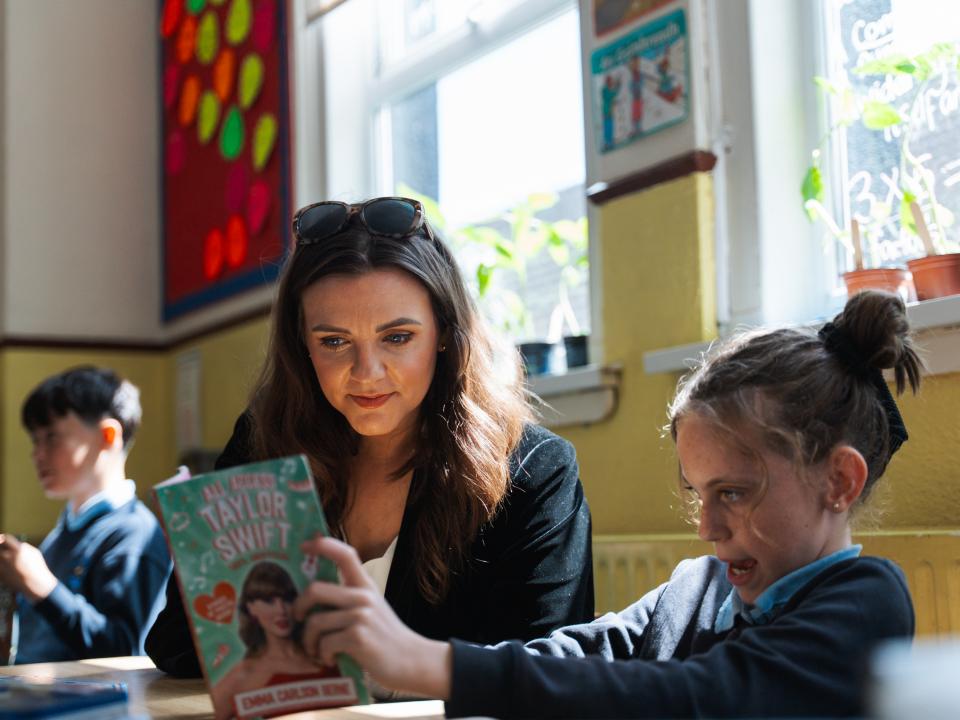
Reading has long been part of Sarah’s life. Her mother was also a teacher and encouraged a love of books from an early age.
“Reading has always been a big part of my life. Mam always made sure reading was never a chore but an adventure.”
That relationship with books became particularly meaningful when Sarah’s eldest daughter, Abbie, was born prematurely and spent several weeks in an incubator.
“We just read to her all the time. Now she has her own little library in her room, and she loves the MS Readathon. As she says, ‘you can just get lost in a story and switch off from the world.”
As a primary school teacher, Sarah sees the value of reading every day and says one of the strengths of the MS Readathon is that children can choose material that suits them.
“There are no rules about what they can read. It could be a comic or an audiobook, not just a full novel.”
After her diagnosis, Sarah began using services provided by MS Ireland, including physiotherapy, community support and respite care.
She said meeting other people who understood what she was experiencing was particularly important.
“It was fantastic to connect with people who understand. There’s no judgment. They just get it.”
Sarah also stayed at the MS Ireland Respite Centre, where she formed strong friendships with others living with MS.
“The group I became part of were amazing. We laughed so much about the horrible things we were going through, shared our stories, and even bought matching pyjamas. It was so healing.”
She now hopes her role as an MS Readathon ambassador will encourage schools to see the MS Readathon as more than a reading challenge.
“One of the greatest privileges of teaching is knowing the lessons we teach extend beyond the curriculum. For pupils, it isn’t just about counting books or sponsorship. It’s about kindness, generosity and community. They learn that opening a book can help another person.”
First launched in 1988, the MS Readathon will take place throughout November 2026, with children and adults invited to get sponsored to read in support of MS Ireland.
MS Ireland Chief Executive Ava Battles said the MS Readathon helps encourage a love of reading while supporting services for more than 11,000 people living with MS in Ireland.
Schools, families and individual readers can register at msreadathon.ie.